Business Continuity Planning for SMEs: A Practical Guide
By ATTPL Group · · 3 min read

Power failures, floods, fires, cyber attacks, a key supplier shutting down or a sudden illness in a small team — any of these can stop a business for days. Business continuity planning (BCP) prepares you to keep critical work running and recover quickly. For small and medium businesses, a BCP does not need to be a thick manual; a clear, tested plan of a few pages is far more useful.
1. Identify your critical activities
List the activities that must continue for the business to survive: taking orders, production, dispatch, billing, payroll, customer support. For each, note how long it can stop before serious damage (the maximum tolerable downtime), and what it depends on — people, premises, equipment, data, suppliers and utilities.
2. Assess the risks
- Premises: fire, water leakage, structural problems or loss of access.
- Utilities: long power cuts, internet outages, water shortages.
- Technology: server failure, ransomware, data loss.
- People: dependence on one person who alone knows a process or holds passwords.
- Supply chain: single-source suppliers, transport disruption.
- Finance: delayed receivables or sudden large expenses.
Rank risks by likelihood and impact so you spend effort where it matters most.
3. Build recovery strategies
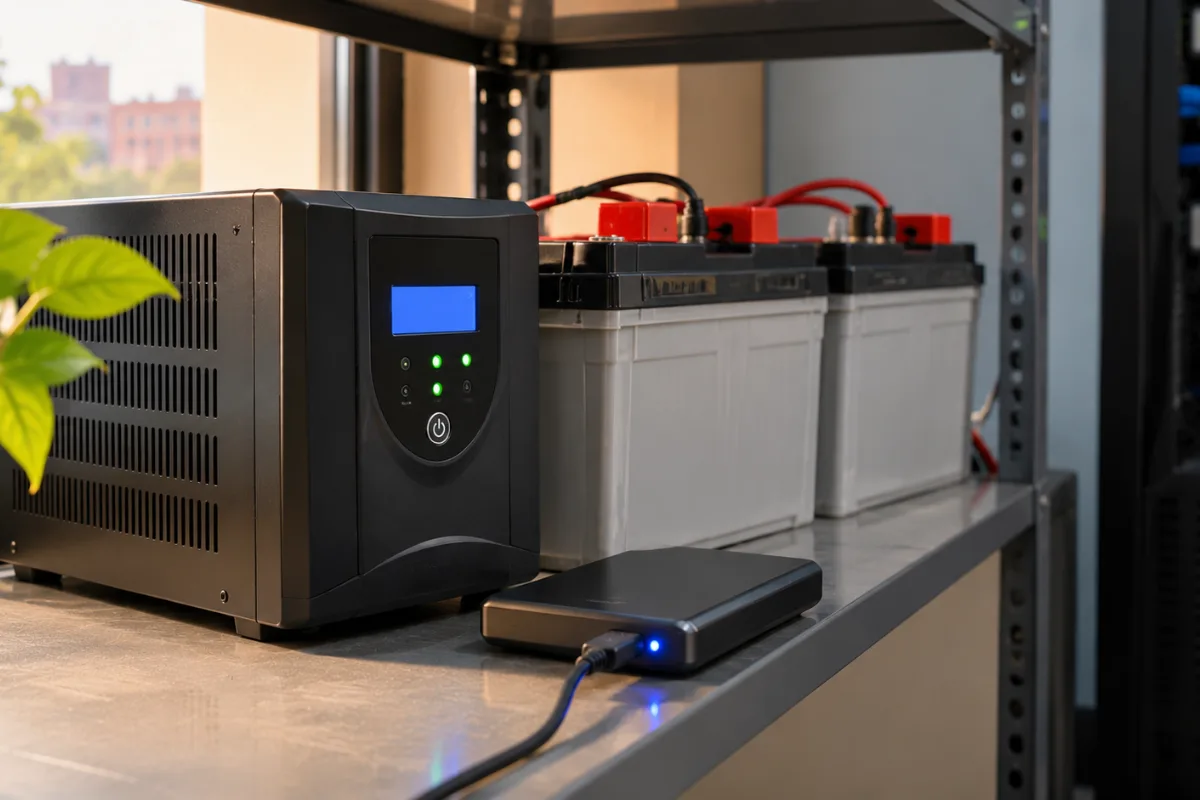
- Power: DG set or UPS for critical loads, and solar with storage where suitable.
- Data: automated backups following the 3-2-1 approach (three copies, two media, one off-site) and tested restores. Our IT team’s backup and disaster recovery guide explains this in detail.
- Work location: ability to work from another branch or from home with secure remote access.
- People: documented procedures and cross-trained backups for every critical role.
- Suppliers: alternate vendors for critical inputs, with basic due diligence done in advance.
- Finance: a cash buffer or pre-arranged working capital line; see working capital loan options.
- Insurance: property, stock and business interruption cover matched to your real exposure.
4. Write the plan
A practical BCP fits on a few pages and contains:
- Who declares an incident and who leads the response.
- An up-to-date contact list of staff, key customers, suppliers, insurers, landlord and service providers.
- Step-by-step actions for the top risks.
- Where backups, spare equipment and copies of key documents are kept.
- How and what you will communicate to customers and staff.
5. Test and update
Run a simple tabletop exercise at least once a year: pick a scenario such as “the office is inaccessible for a week” and walk through the plan. Test data restores and generator switch-over. Update contacts and procedures after every change in people, systems or premises, and after any real incident.
6. Linking continuity with safety and compliance
Many continuity risks overlap with safety requirements — fire systems, electrical safety and emergency exits. The industrial safety compliance checklist is a useful companion for factories and warehouses.
Frequently asked questions
Is a BCP only for large companies?
No. Small businesses are often more vulnerable to disruption, and a short, practical plan gives them the most benefit.
How often should the plan be tested?
At least once a year, and after major changes in staff, systems or premises.
What is the difference between disaster recovery and business continuity?
Disaster recovery usually refers to restoring IT systems and data; business continuity covers the whole business, including people, premises, suppliers and customers.
Sources
Want help planning for continuity? Contact ATTPL Group.
Related reading: Keep customers informed during disruptions with WhatsApp Business automation for small businesses.