Office Electrical Safety Audit: A Practical Checklist for Businesses
By ATTPL Group · · 3 min read
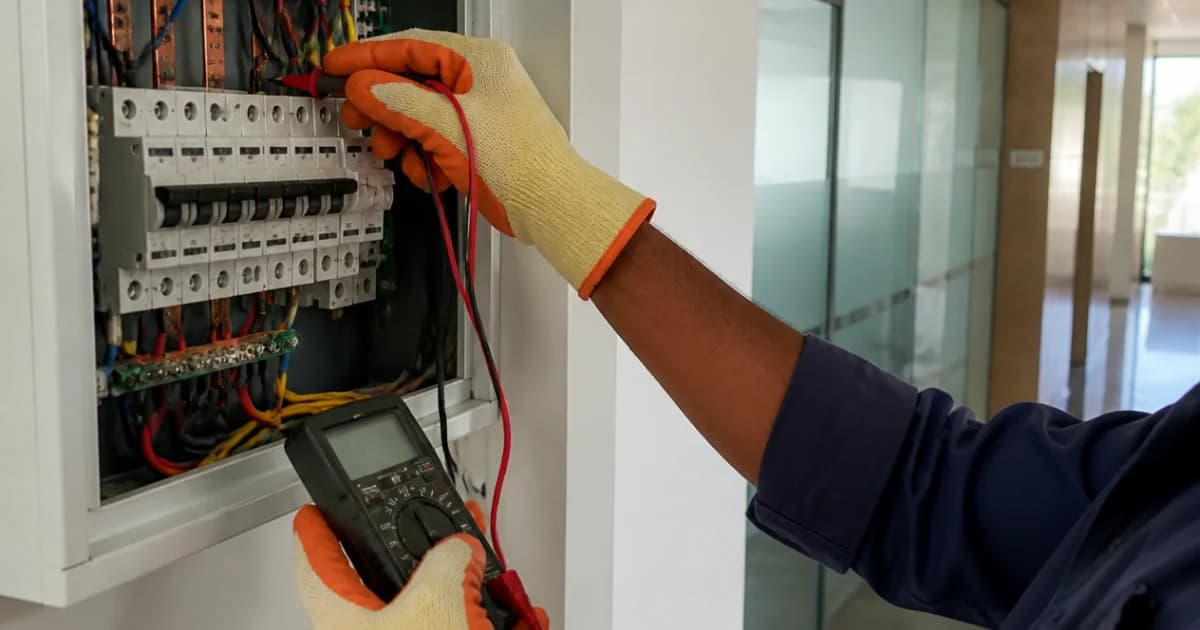
Electrical faults are one of the most common causes of fires in offices, shops and small factories. Most of them are preventable: an overloaded extension board, a loose connection in a distribution board, or earthing that was never tested after a renovation. A periodic electrical safety audit finds these problems before they cause damage.
1. What an audit covers
- Main incoming supply, meter and main switch
- Distribution boards: MCBs, RCCB/ELCB, labelling and loose connections
- Earthing pits and earth resistance readings
- Wiring condition, cable sizes and joints
- Sockets, extension boards and heavy appliances such as ACs, heaters and servers
- Emergency lighting, UPS and generator changeover
2. Common problems found
- Daisy-chained extension boards under desks
- Burnt or discoloured sockets and switches
- Missing RCCB protection on socket circuits
- Unlabelled boards that slow down emergency shutdown
- Cables running under carpets or through doors
- Panels blocked by stored material
3. Thermal scanning and testing
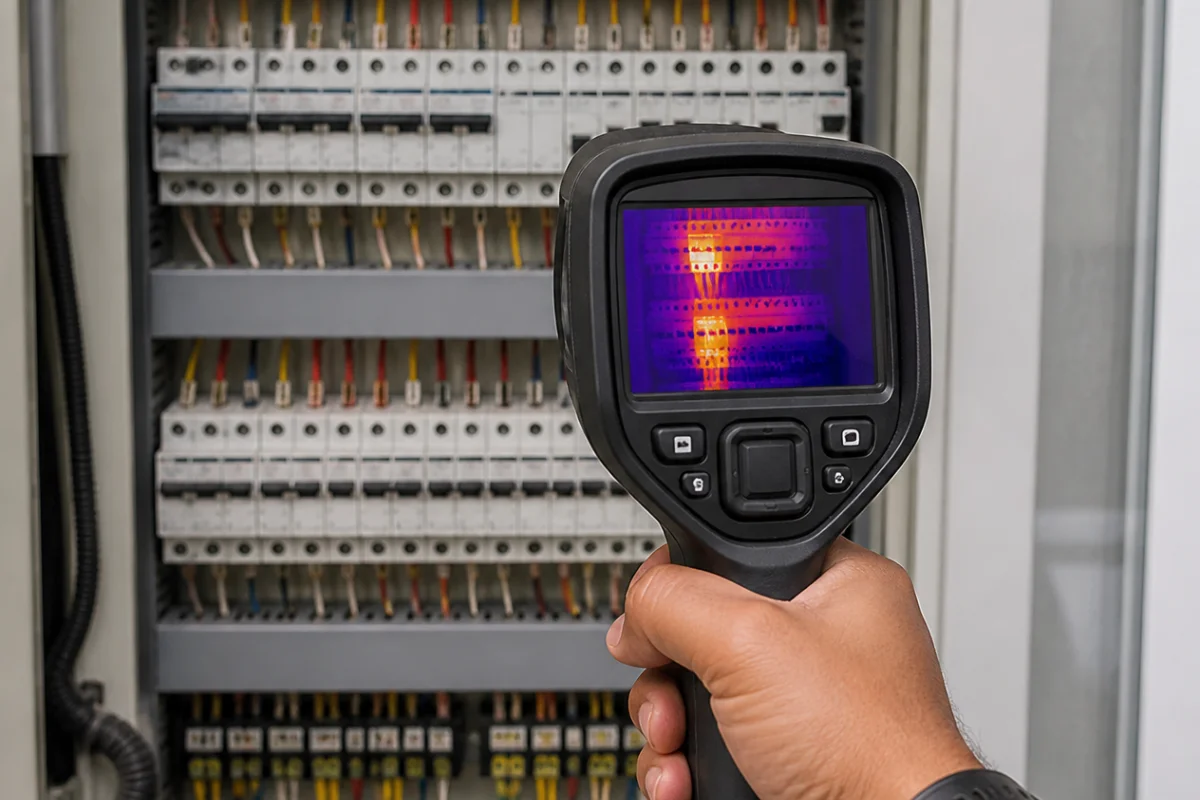
A qualified electrician can use an infrared thermal camera to spot hot joints in panels while the load is running, and test earth resistance and insulation. These readings should be recorded so the next audit can compare them. The building’s fire NOC and fire safety plan, explained in our fire safety NOC guide, depend on electrical installations being in good condition.
4. Fixing and recording
Rank findings by risk: immediate hazards first, then items for the next maintenance window. Keep a simple register of the audit date, findings, actions and who closed them. Many businesses add electrical checks to an annual maintenance contract so they happen on schedule.
5. Daily habits that prevent faults
Audits happen once a year, but most electrical risks build up day by day. Simple habits make a large difference between audits.
- Switch off non-essential equipment, heaters and pantry appliances at the end of the day.
- Report warm sockets, flickering lights, burning smells or tripping breakers at once instead of resetting and ignoring them.
- Keep at least one metre clear in front of distribution boards and panels.
- Never hang wet clothes, mops or decorations near electrical points.
- Do not let staff open panels or change fuses unless they are trained and authorised.
- Check that fire extinguishers near panels are the right type for electrical fires and are within their service date.
A short monthly walk-round by the facility in-charge, with a one-page checklist, catches many issues early and gives the auditor useful history.
6. How often to audit
A yearly audit is a sensible minimum for most offices, with more frequent checks for factories, kitchens, server rooms and older buildings. Audit again after any major renovation or load addition. Combine it with fire drills and evacuation planning. For a discussion about your requirement, contact ATTPL HOLDCO or call toll-free 1800-890-0815.
Frequently asked questions
Who should carry out an electrical audit?
A licensed electrical contractor or a qualified electrical engineer, as applicable under state rules.
Is an RCCB necessary in an office?
RCCBs protect people from earth-leakage shocks and are widely recommended on socket circuits; your electrician can advise for your installation.
Can extension boards be used permanently?
They should not replace proper sockets. Permanent loads need fixed wiring sized for the load.
Sources
This article is general information, not professional advice. Rules, rates and schemes change; please check the official sources and consult a qualified professional.