
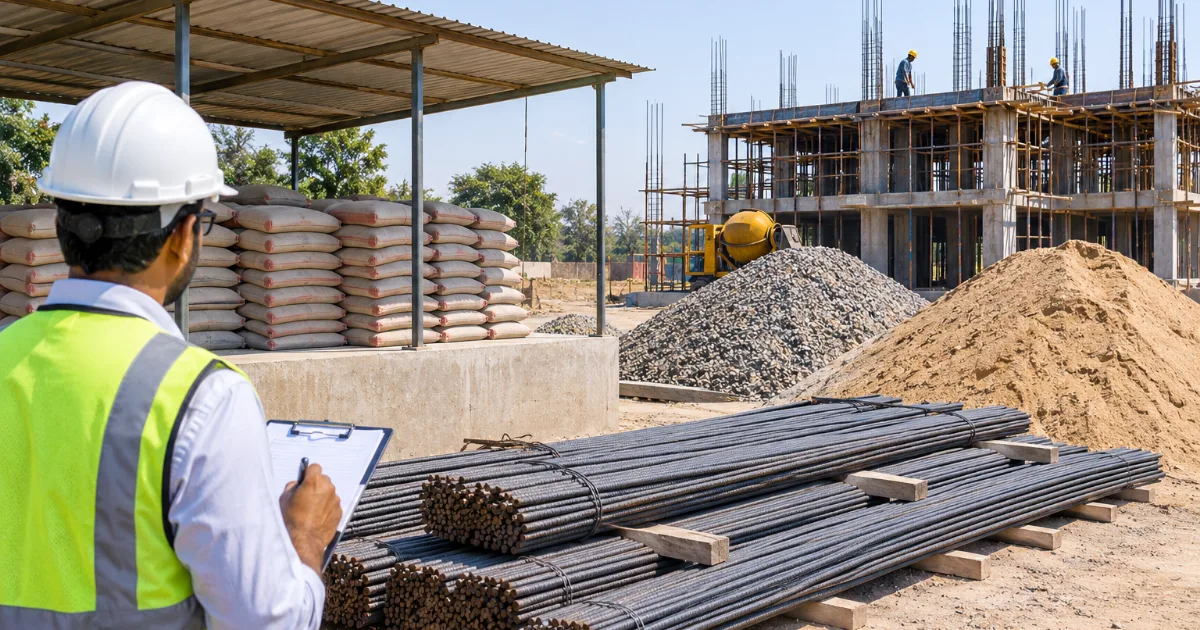
Material is one of the largest cost items on any construction project, and its quality decides how long a structure will last. Buying cement, steel and aggregates only on price can lead to rework, delays and safety concerns. For builders and contractors in Jaipur and across Rajasthan, a disciplined procurement process protects both budget and quality. This guide covers planning quantities, checking cement, steel and aggregates, evaluating vendors and storing materials properly on site.
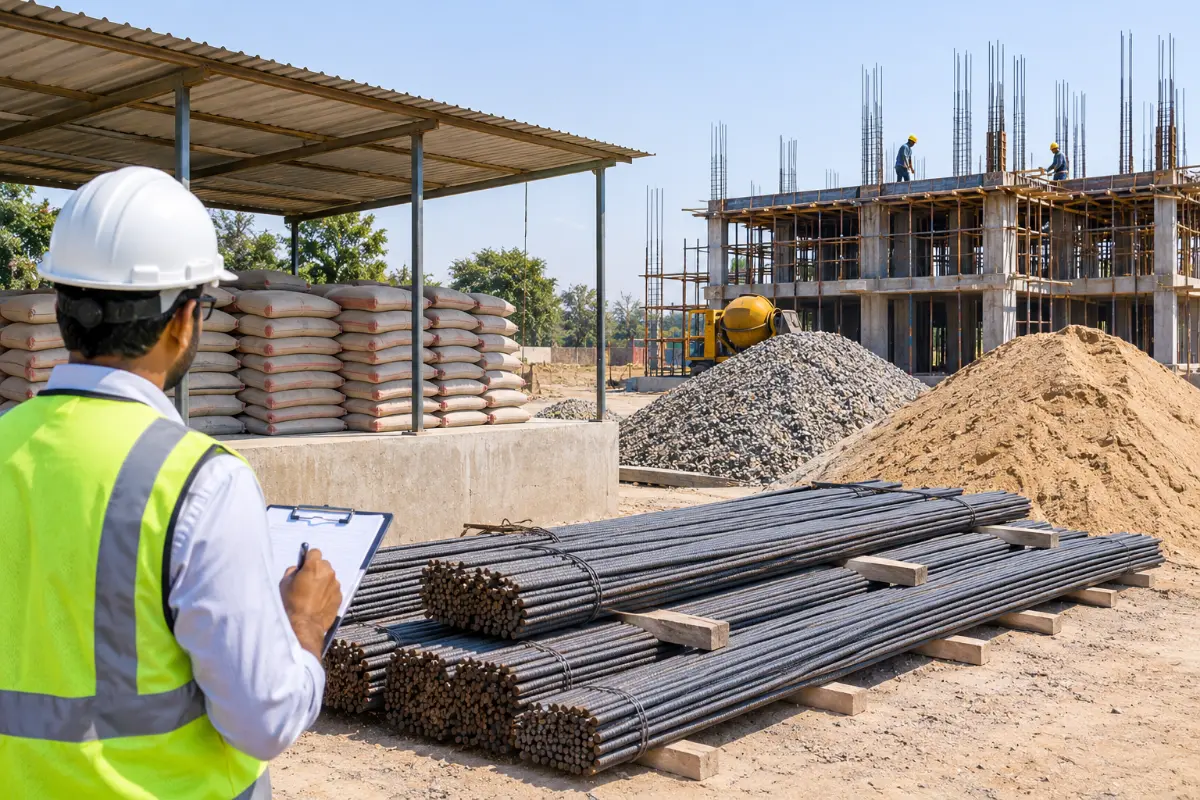
Plan Construction Material Procurement Before Work Starts
Good procurement starts with drawings and a bill of quantities. Estimate material needs by stage, from foundation to finishing, and match deliveries to the construction schedule so that materials neither run short nor sit unused for long.
- Prepare stage-wise quantity estimates from approved drawings
- Fix specifications, grades and applicable BIS standards in purchase orders
- Plan delivery schedules around site storage capacity
- Keep a buffer for wastage based on past experience
- Budget for testing and inspection costs
Funding gaps often delay bulk purchases. Understanding how a working capital loan for small businesses works can help contractors plan cash flow for material-heavy stages.
Involve the site engineer and the purchase team together while finalising specifications. When both agree on grades, brands acceptable under the contract and inspection steps, there is less confusion at the time of delivery and fewer disputes with suppliers.
Cement Quality Checks
Cement loses strength if it is old or exposed to moisture. On receipt, check:
- The grade and type match the purchase order and design requirements
- The manufacturing week and year marked on the bag, so that stock is reasonably fresh
- Bags are intact, without lumps or signs of moisture
- Weight of a sample of bags
- Test certificates from the manufacturer for each lot
For important structural work, send samples to a recognised laboratory. Cement performance also depends on how concrete is mixed, placed and cured; our partner site’s concrete quality control checklist for construction sites explains the site-level checks that follow.
Steel Reinforcement Quality Checks
TMT bars form the skeleton of reinforced concrete, so their quality cannot be compromised. When steel arrives:
- Confirm the grade, diameter and quantity against the order
- Check that bars carry the manufacturer’s markings as required
- Ask for mill test certificates for each heat or lot
- Look for rust beyond light surface oxidation, cracks or bends
- Weigh sample bars to confirm weight per metre is within tolerance
Store steel off the ground on supports and cover it to reduce corrosion during the monsoon.
Bar bending schedules prepared from structural drawings help order the right diameters and lengths, reducing cutting waste. Check bent bars against the schedule before placing them in formwork, and keep records of which lot was used in which structural member for future reference.
Aggregates and Sand Quality Checks
Coarse aggregates, fine aggregates and sand influence concrete strength and workability. Inspect each load for:
- Correct size and grading as specified
- Excess silt, clay, organic matter or dust
- Flaky or elongated particles in coarse aggregate
- Moisture content, which affects water in the mix
Simple site tests such as a silt content check can catch problems early, while laboratory tests confirm grading and other properties. Rajasthan has rich deposits of stone and minerals, and understanding mineral sources and specifications helps buyers ask suppliers the right questions about origin and quality.
How to Evaluate Construction Material Vendors
A dependable vendor supplies consistent quality on time and supports you with documents. Evaluate suppliers on:
- Authorised dealership or direct manufacturer relationship
- Ability to provide test certificates and proper GST invoices
- Delivery capacity during peak construction seasons
- Price transparency and clear credit terms
- Track record you can verify with other builders yourself
Our vendor due diligence checklist for SMEs in India offers a structured approach. For finishing materials such as marble, granite and sandstone, see the natural stone buying guide for Jaipur.
Site Storage, Records and Next Steps
Even good material can be ruined by poor storage. Stack cement on raised platforms in a covered, dry area and use older stock first. Keep aggregates on hard, clean ground, separated by size. Maintain a material register recording receipts, test results and issues to each work area.
Review consumption against estimates every month. Large gaps between planned and actual use often point to wastage, theft, measurement errors or design changes that need attention before they affect the project budget.
If you want help organising material procurement, vendor evaluation or quality checks for a construction project, contact the ATTPL team to discuss how ATTPL Group can help.
Key takeaway: Builders get better quality and fewer delays when material procurement is planned stage by stage, backed by test certificates, site checks and properly evaluated vendors.
Frequently Asked Questions
Why are test certificates important when buying cement and steel?
They show that the material from a specific lot meets the stated standard. Keep them on file and test samples independently for critical work.
How long can cement be stored on site?
Cement strength reduces with time and moisture, so use it in first-in, first-out order and follow the manufacturer’s guidance on storage.
Should builders buy materials in bulk?
Bulk buying can help with pricing and supply, but match quantities to storage space, cash flow and construction schedule to avoid wastage.